Waste
GOAL: Maintain a corporate diversion rate of 90% through 2035
Goal Update
Baseline (2020): 81%
Q1-2026: 88.5%
Goal: 90%
Locations included:
- Main Bank – 40% diversion rate
- Tech Center – 98% diversion rate
- Tower – 90% diversion rate
- Plaza – Offline as of 2024
- Business Park – 85% diversion rate
Since 2020, we have diverted 8.8 million pounds of waste from the landfill at our corporate locations — equivalent to the annual waste produced by 1,968 homes in the US.
FNBO has set a goal to maintain a 90% corporate waste diversion rate through 2035. Diversion measures how much of our waste is redirected from the landfill through recycling, composting, soft plastic recycling, and other recovery streams. Since setting the goal, we have made significant progress, growing from an 81% diversion rate in 2020 to 89.6% in 2026, putting us just short of our target.
We focus on corporate locations because that is where we have the most reliable, measured waste data. Data for our retail locations currently relies on estimates, and we are actively working to improve how we collect and track waste data across our full footprint. The infrastructure, systems, and lessons built at our corporate locations have laid the groundwork for expansion, and in the coming year, we plan to bring mixed recycling and soft plastic recycling to Omaha-area branches as a first step toward broader system-wide growth.
Where Our Waste Went in 2025
Corporate Waste
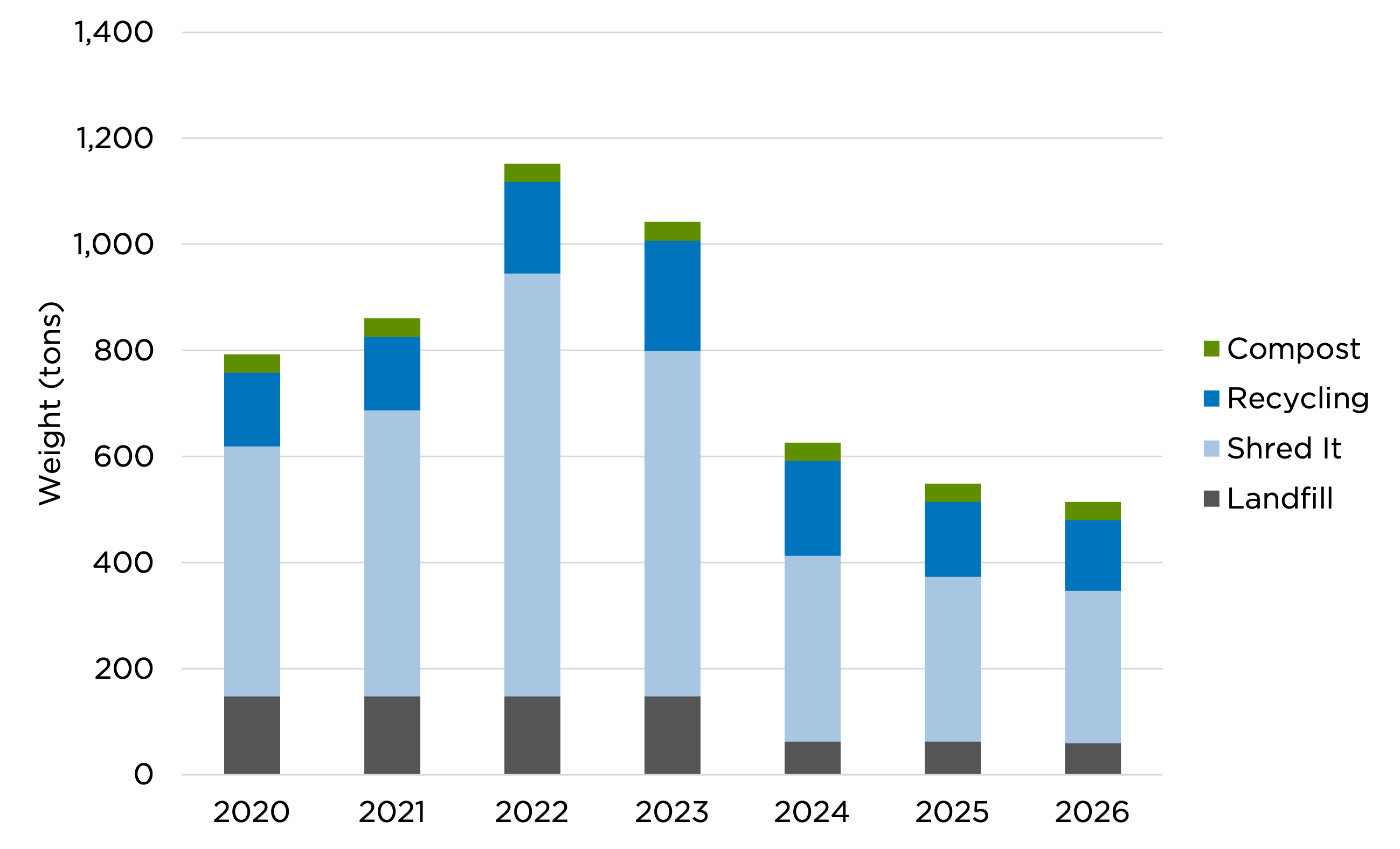
Updated in Q1 of 2026, our four corporate locations diverted 88.5% of waste from the landfill across four streams over the past 12 months.
- Paper Recycling (287 tons, 77.8 tons per location) is our largest diversion stream. Sensitive documents are shredded, and the material is recycled.
- Mixed Recycling (134 tons, 35.2 tons per location) collects mixed materials, including cardboard, specific plastics, and aluminum. This stream also includes the Energy Bag Program, which processes soft plastics and other hard-to-recycle plastic items.
- Compost (34 tons, 8.7 tons per location) processes food waste, compostable serviceware, and other materials through a commercial composting service.
- Landfill (59 tons, 15.5 tons per location) represents the remaining material not currently diverted to another stream.
Retail Waste
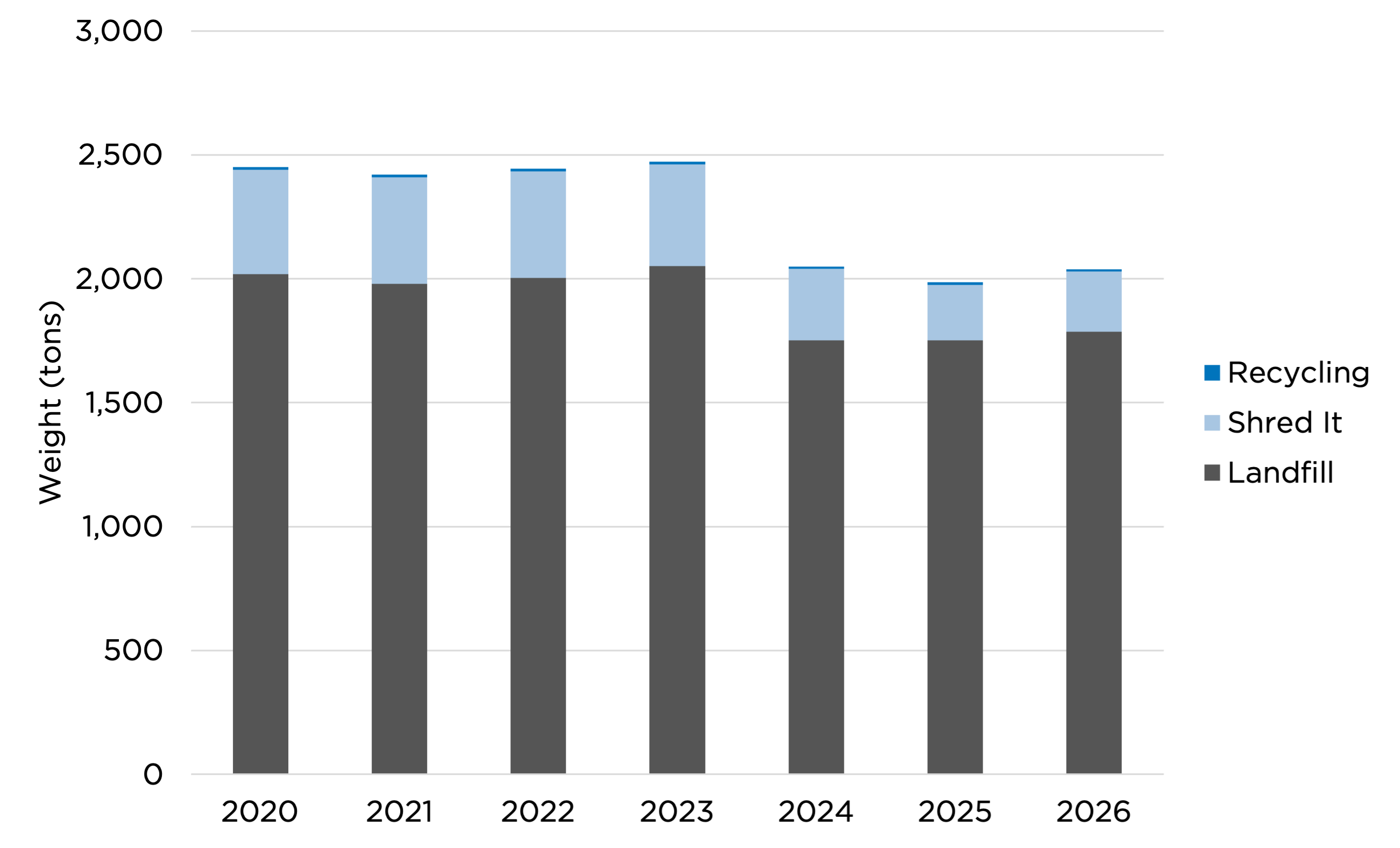
Our retail location waste data is based on estimates rather than directly measured weights. We are working to improve how we collect and track waste data at branch locations as our program grows. Estimated retail waste in updated in Q1 of 2026 for the last 12 months spanned 110 locations across three streams.
- Paper Recycling (243 tons, 2.2 tons per location) shreds sensitive documents, with the material recycled rather than sent to the landfill.
- Mixed Recycling (9 tons, 0.1 ton per location) collects mixed materials, including cardboard, certain plastics, and aluminum, which are then sorted and sent to recycling facilities.
- Landfill (1,786 tons, 17.2 tons per location) represents the remaining material not currently diverted to another stream.
What’s Driving Our Progress to Date
FNBO’s progress toward a 90% corporate diversion rate is driven by several interconnected strategies that have collectively diverted 8.8 million pounds of waste from the landfill since 2020.
- Centralized waste and recycling in corporate buildings forms the foundation of our diversion efforts. A recycling program launched in March 2022 introduced mixed recycling across our corporate locations. We also repurposed a landfill compactor at the Tower to collect recycling, which significantly reduced landfill waste.
- In 2024, 539.9 tons of waste were diverted from the landfill, equivalent to 5,399 ATMs.
- Eliminating single-use materials reduces waste before it is even generated. Our food and hospitality partner, Eurest, eliminated Styrofoam and transitioned food areas to compostable serviceware. We have also phased Styrofoam out of our procurement catalog entirely.
- Building-specific comprehensive waste updates have allowed us to tailor our approach to each location, adding additional streams including compost and soft plastic recycling to capture materials beyond mixed recycling. Following the success of the Tower program, we designed a similar comprehensive waste infrastructure for Business Park. In 2025, Business Park achieved an 89% diversion rate, and with updated infrastructure and strategic communications, we expect to reach 90% going into 2026.
- Engagement has been central to each building rollout. Updated waste signage, targeted communications, and the transition to community waste stations with fewer individual desk bins help employees sort waste correctly and sustain high diversion rates.
- Data-informed expansion guides how we identify and close gaps. New data collection and monitoring protocols continue to inform our approach as we work toward our 90% goal.
- Expanding to branches is the next step in our sustainability journey. In the coming year, we plan to build on our corporate success by expanding mixed recycling and soft plastic recycling to Omaha-area branches.
How to Support this Goal While you Work
- Properly sort your waste while at work
- Bring reusable cups, utensils, etc. to work
- Think twice before printing, but if you do need to print, print double-sided
- Before buying something new, see if something is already in the building