Emissions
GOAL: Net zero Scope 1 and 2 emissions by 2035
Goal Update
Baseline (2017-2019): 53,623 MtCO2e
Q1-2026: 20,613 MtCO2e (61.6% reduction)
Goal: 5,362 MtCO2e
Metric tons of carbon dioxide equivalent for Scope 1 and 2 emissions
Pathway to Net Zero
FNBO is pursuing net zero, which means we are aiming to reduce at least 90% of our base year emissions and offset the remaining emissions, so that our total impact is net zero.
- Interior LED replacement projects, 100% of remaining systems by 2030, -2,200 MtCO2e
- Exterior LED replacements, 100% of remaining systems by 2030, -500 MtCO2e
- Update building management control systems, 100% of remaining systems by 2030, -100 MtCO2e
- Electrify boilers, 100% of systems as they reach the end of operation or by 2050, -300 MtCO2e
- Upgrade fan wall systems, 100% by 2035, -1,100 MtCO2e
- Efficiency gains from occupancy, 100% by 2030, -8,900 MtCO2e
- Renewable energy certificates (RECs), or virtual power purchase agreement (VPPA), explore as needed
FNBO will also benefit as the regional electricity grid continues shifting toward cleaner energy sources, which reduces the emissions tied to every kilowatt-hour of electricity used.
Together, these strategies are expected to reduce emissions from FNBO’s buildings and facilities by approximately 67% by 2035 and 89% by 2050. Any remaining emissions will be addressed through carbon offsets or renewable energy agreements, keeping FNBO on track for net zero by 2035.
*Why we use MtCO2e (Metric Tons of Carbon Dioxide Equivalent): Carbon dioxide isn’t the only greenhouse gas (methane and nitrous oxide are also major contributors), but they all have different global warming potential (GWP). CO2e allows us to bundle all different types of gases into one number.
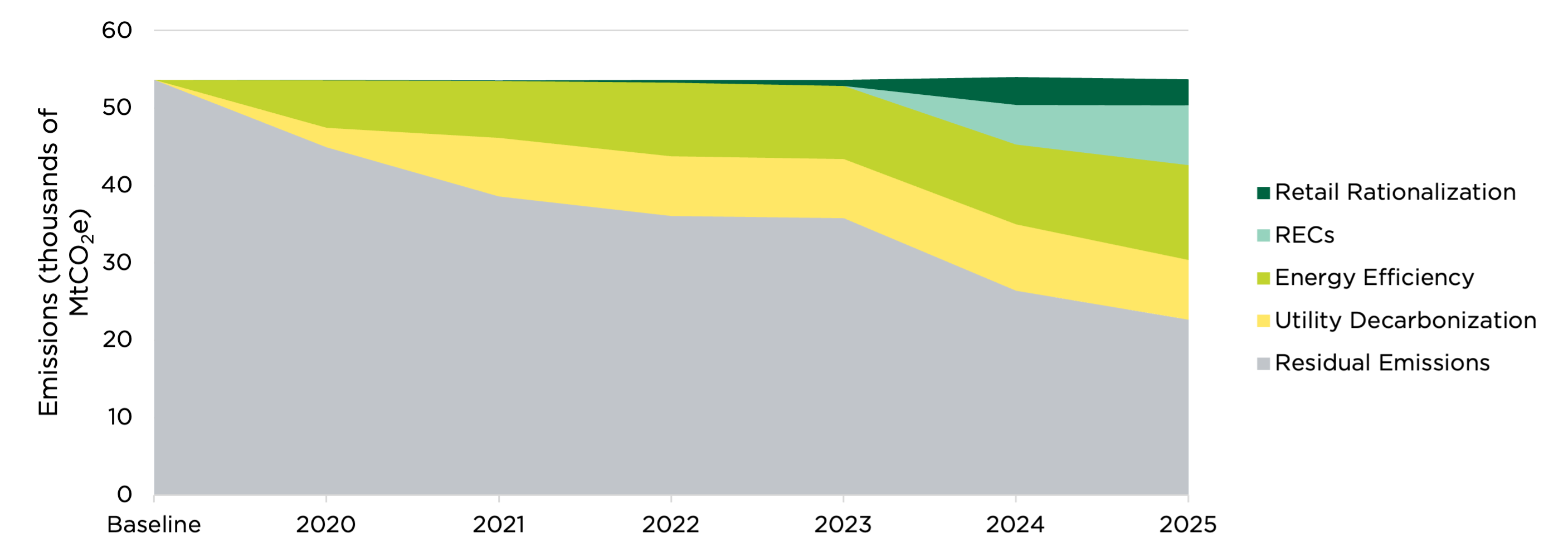
Decarbonization Progress by Strategy
What’s Driving Our Progress to Date
FNBO’s progress toward net zero is driven by four interconnected strategies that have collectively reduced emissions by 57% from the baseline as of 2025.
- Retail Rationalization contributed a 3,000 MtCO2e reduction through the strategic downsizing of FNBO’s physical building footprint.
- Renewable Energy Certificates (RECs) have been scaled since 2024, providing an additional 5,000 MtCO2e reduction (a 9% impact relative to baseline). FNBO has also entered a community solar agreement for its Illinois branches, covering 70% of electricity use in that state.
- Energy Efficiency and Mechanical Upgrades remain the primary driver of decarbonization, eliminating 15,000 MtCO2e and reducing the original baseline by 28%. This includes upgrades to building systems, fan walls, and the 2020 decommissioning of a natural gas fuel cell at the Tech Center, which alone removed 500 MtCO2e annually. LED lighting conversions are also well underway, with 85% of exterior systems and 62% of interior systems already upgraded.
- Utility Decarbonization accounted for 8,000 MtCO2e in avoided emissions as of 2025, maintaining a steady 15% reduction rate relative to the baseline since 2021.
A Change to Our Electricity Emissions Calculation
To track emissions from electricity use, FNBO applies a standard number called an “emission factor,” essentially a measure of how much carbon is released to produce each unit of electricity. The lower the factor, the cleaner the electricity supply. For years, FNBO used emission factors published by Omaha’s local utility, Omaha Public Power District (OPPD). In 2024, OPPD stopped publishing those figures and directed customers to use a broader regional average instead, drawn from a national energy database. The regional figure is about 19% lower than what OPPD previously reported, reflecting a cleaner overall energy grid in the region. As a result, FNBO’s reported emissions dropped approximately 8%, not because energy use changed, but because of this updated calculation method.
Renewable Energy Certificate Purchasing Through the Omaha Public Power District
Renewable Energy Certificates (RECs) represent proof that electricity was generated from renewable energy sources and fed into the grid. By purchasing RECs, FNBO supports renewable energy development and offsets the environmental impact of its electricity usage.
FNBO is purchasing RECs through OPPD’s REC Program, ensuring that 100% of the Tower’s electricity usage is offset by renewable energy. From January through December 2024, FNBO purchased enough RECs to offset the Tower’s total electricity usage of 8,059,021 kWh (5,874 MWh). This commitment has avoided approximately 3,054 metric tons of CO₂e, equivalent to the annual emissions of 790 passenger vehicles or 455 homes’ energy use for a year.
Through its REC purchases, FNBO is making meaningful progress toward its sustainability goals and supporting a cleaner, greener future.
How to Support this Goal While You Work
- Turn off lights when you leave a room or in empty areas
- Unplug or turn off equipment when not in use (computers, coffee makers, printers, chargers, etc.)
- Take the stairs if possible
- Open doors manually if able
- Dress for the weather
- Resist adjusting the thermostat